
7 nights
From
£4,499
pp

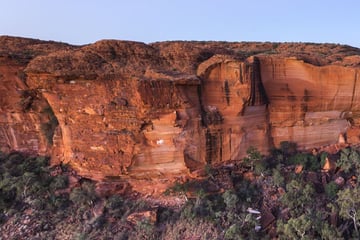
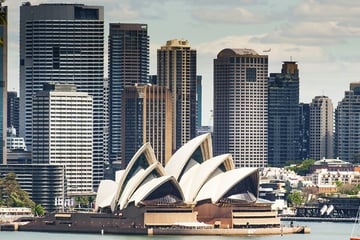
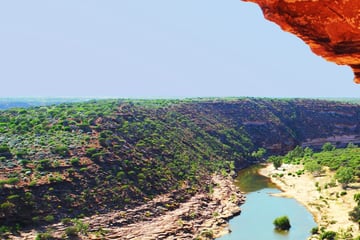
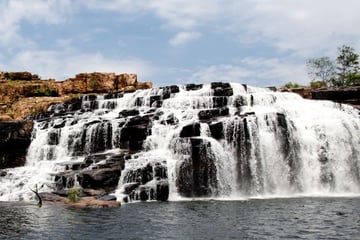
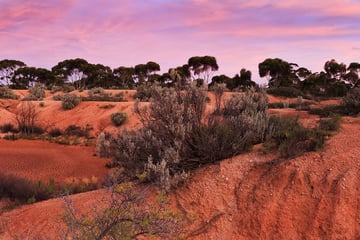

If you really want to get under the skin of Australia, you need to meet its oldest storytellers first. Genetic research has confirmed what Aboriginal Australians have always known: theirs is the oldest continuous living culture on Earth, with evidence placing their ancestors on this continent for at least 40,000 years, and some studies suggesting closer to 65,000 – tens of thousands of years before Stonehenge was built, and a full 227 years before the First Fleet sailed into Sydney Cove in 1788.
We've been sending British travellers to Australia for over two decades, and if there's one piece of advice our specialist consultants give again and again, it's this: don't treat Aboriginal culture as a single stop on your itinerary. Weave it through your whole trip. From a dawn smoking ceremony in a Melbourne botanic garden to a night beneath the stars at Uluru listening to Tjukurpa stories, these experiences are some of the most quietly profound moments our clients come home talking about – often more than the reef, more than the wine, more than the wildlife.
Here's our region-by-region guide to the best ways to experience Aboriginal culture and history as you travel through the Land Down Under, built from the trips we've curated (and taken ourselves).

It surprises a lot of our clients to learn that some of the richest Aboriginal storytelling in the country happens right in the shadow of the Harbour Bridge. Sydney's Aboriginal heritage isn't tucked away in a museum – it's under your feet on the sandstone of The Rocks, and it's out on the water itself.
This 90-minute walkabout, led by an Aboriginal guide through the cobbled lanes of The Rocks, is one we always recommend as a gentle first introduction to Dreamtime storytelling – it needs no fitness, no bushwalking boots, just curiosity. It opens with a traditional welcome ceremony overlooking the harbour before the group crosses towards the Bridge, uncovering sacred sites and rock engravings that most visitors walk straight past without noticing. It finishes with a lunch featuring native Australian flavours, which is a lovely, unexpected way to close out a morning in the city. We'd suggest booking this for your first or second day in Sydney, before your legs and your head are too jet-lagged to take it all in.
The harbour itself has a name in the local Gadigal language – Birra Birra – and the Tribal Warrior Cruise is the best way we know of experiencing it through Aboriginal eyes rather than a standard sightseeing lens. The boat carries you out to an island for a cultural performance exploring life here before European settlement, with stories from the Cadigal, Eora, Wangal and other Aboriginal nations who still call this harbour home today. It's a genuinely moving contrast to the glass towers on the skyline behind you.
Canberra rarely makes it onto a first-time Australia itinerary, and that's a shame, because the Australian Capital Territory has one of the longest documented histories of Aboriginal occupation on the continent.
If you've got a full day to spare, a 4WD tour through Namadgi National Park – which covers almost half the ACT's total land area – is well worth the detour. Archaeological evidence shows the Ngunnawal people have occupied this country for at least 21,000 years, and the landscape is scattered with cultural sites alongside wombats, kangaroos, emus and swamp wallabies going about their business. Highlights include the Yankee Hat rock art site, sampling native bush foods, and hearing Ngunnawal stories from your guide – with a decent chance of spotting an Aboriginal artefact along the way. These tours typically run from September through to March, so it's worth checking availability before you build your dates around it.
At 888 metres, Mount Majura is the highest peak in suburban Canberra, sitting on the city's north-eastern edge. The two-hour Dhawura Tour here is more accessible than the full-day Namadgi trip and covers the mountain's cultural significance to the Ngunnawal people, bush food identification, traditional tool use, and the chance to spot a "scar tree" – where bark was once carefully removed to make containers, shields or canoes. The climb is genuinely worth it for the valley views alone, even before you factor in the cultural insight.
Melbourne wears its colonial history openly, but its Aboriginal story runs much deeper, and it's one you can access without leaving the city centre.
Bunjilaka's First Peoples exhibition has picked up genuine acclaim, and rightly so – it's one of the most thoughtfully curated Aboriginal cultural spaces we've visited anywhere in Australia. A free guided tour takes you through the history, culture and living achievements of the Woiwurrung and Boonwurrung people of the Kulin nation, with cave paintings, live animals, and displays on the traditional uses of native plants alongside the museum's wider artefact collection.

We always tell clients this is the walk to do if they only have time for one Aboriginal experience in Melbourne. The Heritage Walk through the Royal Botanic Gardens explores their history as Kulin nation ancestral land, and includes a traditional smoking ceremony along with a guided talk on how local plants were used as medicine, food and tools – it's a completely different way of seeing gardens you might otherwise wander through without a second thought.
About a three-hour drive from Melbourne, the Grampians – known to the Aboriginal people as Gariwerd – hold an association stretching back more than 30,000 years and are home to roughly 80% of Victoria's known Aboriginal rock art, spread across some 60 different sites and featuring over 4,000 individual motifs. It's an easy add-on to a Great Ocean Road itinerary and one of our favourite "hidden depth" stops in Victoria.
The Brambuk Centre in Halls Gap is worth a couple of hours on its own. Its Dreaming Theatre runs presentations on both the Indigenous and European history of the region – including its flora, fauna and geology – and the Gariwerd Creation Story, told with real warmth and detail.
Guided tours from Brambuk led by Aboriginal rangers take you to highlights including ancient handprints and enormous emu footprints at a boys' initiation site, plus a striking red and white ochre painting of the Bunjil Creation Ancestor. Sturdy shoes and a bit of stamina help here, as some sites involve uneven terrain.
There's a moment most of our clients describe when they first see Uluru rise out of the desert – it's bigger, redder and somehow more alive than any photograph prepares you for. Rising 1,142 feet (348 metres) above the surrounding plain, it's genuinely taller than the Eiffel Tower, but its real significance has nothing to do with size. Its traditional owners, the Anangu, maintain a living connection to this land through rituals, songs, ceremonies, art and dance passed down over thousands of years.

The Mala Walk along Uluru's base is one we recommend to almost everyone, regardless of fitness level – it's flat, well-shaded in parts, and rich with rock art and carvings left by generations of ancestral custodians. Keep an eye out for arnguli (bush plum) and ili (wild fig) along the trail, watch local artists at work, and listen to Anangu creation stories that bring the landscape to life in a way no guidebook can.
At Ayers Rock Resort, a local Aboriginal artist runs hands-on dot painting workshops explaining the symbols and Tjukurpa (Dreamtime) stories behind the art form, before you create your own canvas to take home – genuinely one of the best souvenirs you can bring back from the Red Centre.

This one goes beyond the national park boundary into the homelands of Uluru's traditional families, where you'll hear firsthand accounts of the fight for Aboriginal land rights in Central Australia over an intimate afternoon tea. It's a smaller, more personal experience than the bigger group tours, so it tends to sell out – something our team can flag when booking.
For a special-occasion evening, Tali Wiru offers a three-course dinner paired with Australian wines atop a remote dune with Uluru visible in the distance, a didgeridoo performance at sunset, and Aboriginal storytelling under some of the clearest night skies you'll see anywhere in the world. Worth booking ahead – it's seasonal and genuinely popular.
A word of honest advice from our Red Centre specialists: the best light, coolest temperatures and clearest skies for these experiences fall between May and September. Visit in the height of summer and you'll still see the same sites, but you'll be doing it in serious heat.
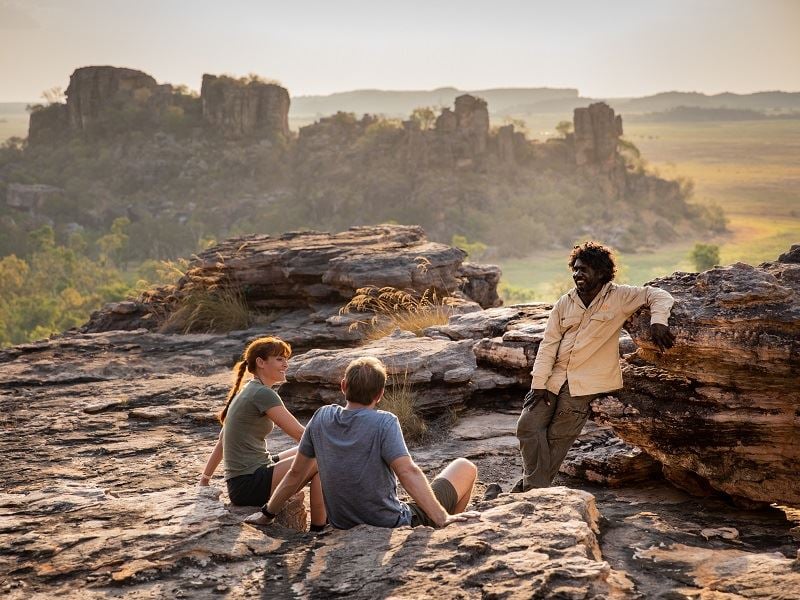
About a three-hour drive from Darwin, Kakadu is home to an estimated 5,000 rock art sites, some dating back 20,000 years, carved and painted along its gorges, escarpments and rock outliers. It's one of the few places on Earth where you can trace a visual record of human life stretching back that far, still visible in the open air.
Visitors can take self-guided tours at three main rock art sites which feature viewing platforms and extensive signage. Ubirr includes a painting of a Tasmanian tiger that became extinct on the mainland some 3,000 years ago as well as early records of European visitors. Nanguluwur features ancient hand stencils with a two-masted sailing ship, a female spirit with four arms and horns, and figures wearing large headdresses carrying boomerangs and spears. Visit Nourlangie to marvel at a remarkable depiction of the Lightning Man Creation Ancestor.
An Aboriginal-led 4WD tour with Kakadu Cultural Tours pushes further into the Mikkinj Valley, known for its abundant wildlife and dramatic billabong scenery. You'll meet working Aboriginal artists at the Injalak Arts & Crafts Centre and watch women weaving traditional pandanus baskets by hand – a craft that hasn't changed in generations.

During the dry season (roughly May to October, Australia's winter and Europe's summer), this easy 1.5-mile trail along the East Alligator River is a lovely, low-effort way to see sandstone formations, caves and rock art without committing to a full-day tour.
One of Kakadu's genuine highlights, this cruise glides through pandanus, mangroves and tropical trees, past sacred Aboriginal sites and rock art dating back some 50,000 years. Keep watch for saltwater crocodiles, wild horses and more than 60 bird species along the way. The cruise also includes a walk through the Nourlangie art site to see the Lightning Man up close.

This is where the wider story comes together: displays explain traditional hunting methods, tribal elder histories, marriage rights and bloodlines, the impact of white settlement in the Top End, and the more recent history of the park. Much of the artwork on display is made by local artists, and you can buy pieces directly – a meaningful way to support the community whose land you're visiting.
Just south of Kakadu, Nitmiluk is home to some of Australia's oldest rock art and the extraordinary Katherine Gorge, carved through sandstone roughly a billion years old.

Owned by the Jawoyn people, Cicada Lodge runs a range of tours, including a helicopter flight over an Aboriginal women's site and the Nipbamjarn boys' initiation site, with an expert guide interpreting the landscape and sharing details rarely told outside the community. It's not cheap, but it's the kind of once-in-a-lifetime perspective that's hard to put a price on.
Nitmiluk Tours run a variety of cruises through the towering sandstone cliffs of Katherine Gorge, from dawn departures timed for the best photographic light to sunset dinner cruises with fresh, locally-inspired dishes served on board. Local Jawoyn guides bring genuine depth to the commentary rather than the generic script you sometimes get on tourist cruises.

This two-and-a-half-hour experience in Katherine puts you face-to-face with Top End Aboriginal artist Manuel Pamkal, who shares his distinctive Rarrk painting technique and stories of living off the land, before you try your hand at painting your own piece, spear throwing, and traditional fire lighting. It's hands-on, unscripted, and one of the most memorable few hours you'll spend in the Territory.
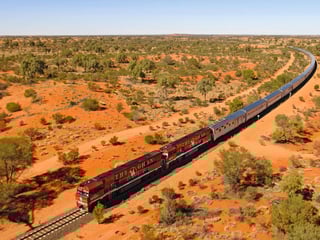
Kakadu and Nitmiluk both sit within easy reach of Darwin – see our Kakadu & Katherine holidays or start your Top End adventure with a stay in Darwin. For a truly unforgettable way to link the Red Centre and the Top End, our Darwin to Adelaide on The Ghan journey crosses the very heart of this ancient country by rail.
Ready to plan your Aboriginal culture holiday?
At Tropical Sky, we don't just sell flights and hotels – we build itineraries around the experiences that will actually stay with you. If Aboriginal culture is a priority for your trip, our Australia specialists can weave these experiences seamlessly into your route, book the right guides at the right time of year, and make sure you're not trying to fit a full-day Namadgi 4WD tour into a half-day layover. Call us on 01342 310 580 or request your free Australia travel guide to get started, and take a look at our current Australia deals for inspiration.
Is it respectful for tourists to visit Aboriginal cultural sites?
Yes, provided you go through the right channels. Aboriginal-led and Aboriginal-owned tours – like those run by the Anangu at Uluru, the Jawoyn at Nitmiluk, or the Ngunnawal-guided Dhawura Tours in Canberra – exist specifically to share culture on the community's own terms, with proceeds supporting local people. Always follow site-specific rules, such as not photographing certain sacred areas, which your guide will explain.
What's the best time of year to experience Aboriginal culture in Australia's Red Centre and Top End?
For the Red Centre (Uluru, Kata Tjuta), the cooler months of May to September offer the most comfortable temperatures and clearest night skies for evening experiences like Tali Wiru. For the Top End (Kakadu, Nitmiluk), the dry season – roughly May to October – is best for accessibility, as some roads and walks close during the wet season.
Can you climb Uluru?
No. Climbing Uluru was permanently closed in October 2019 out of respect for the wishes of the Anangu traditional owners, who see the rock as a sacred site. The 9.4km base walk remains the best way to experience it up close, and we'd always recommend this over trying to summit it.
How many days should I allow to properly experience Aboriginal culture on an Australia trip?
It depends on your route, but we'd suggest at least half a day in each major city (Sydney, Melbourne, Canberra) and a minimum of two to three days in the Red Centre or Top End to properly fit in a mix of walks, art experiences and at least one guided tour. Our specialists can build this into a wider multi-centre itinerary without it feeling rushed.
Do I need to book Aboriginal cultural tours in advance?
For popular experiences like Tali Wiru at Uluru or the SEIT Patji Tour, yes – these are small-group experiences that sell out, particularly in the peak May to September season. Museum-based experiences, like Bunjilaka in Melbourne, are generally more flexible. Booking through us means we handle the logistics and timing so everything lines up with the rest of your itinerary.

Sign up to our newsletter
Be the first to know about our exclusive offers and holiday inspiration by email.